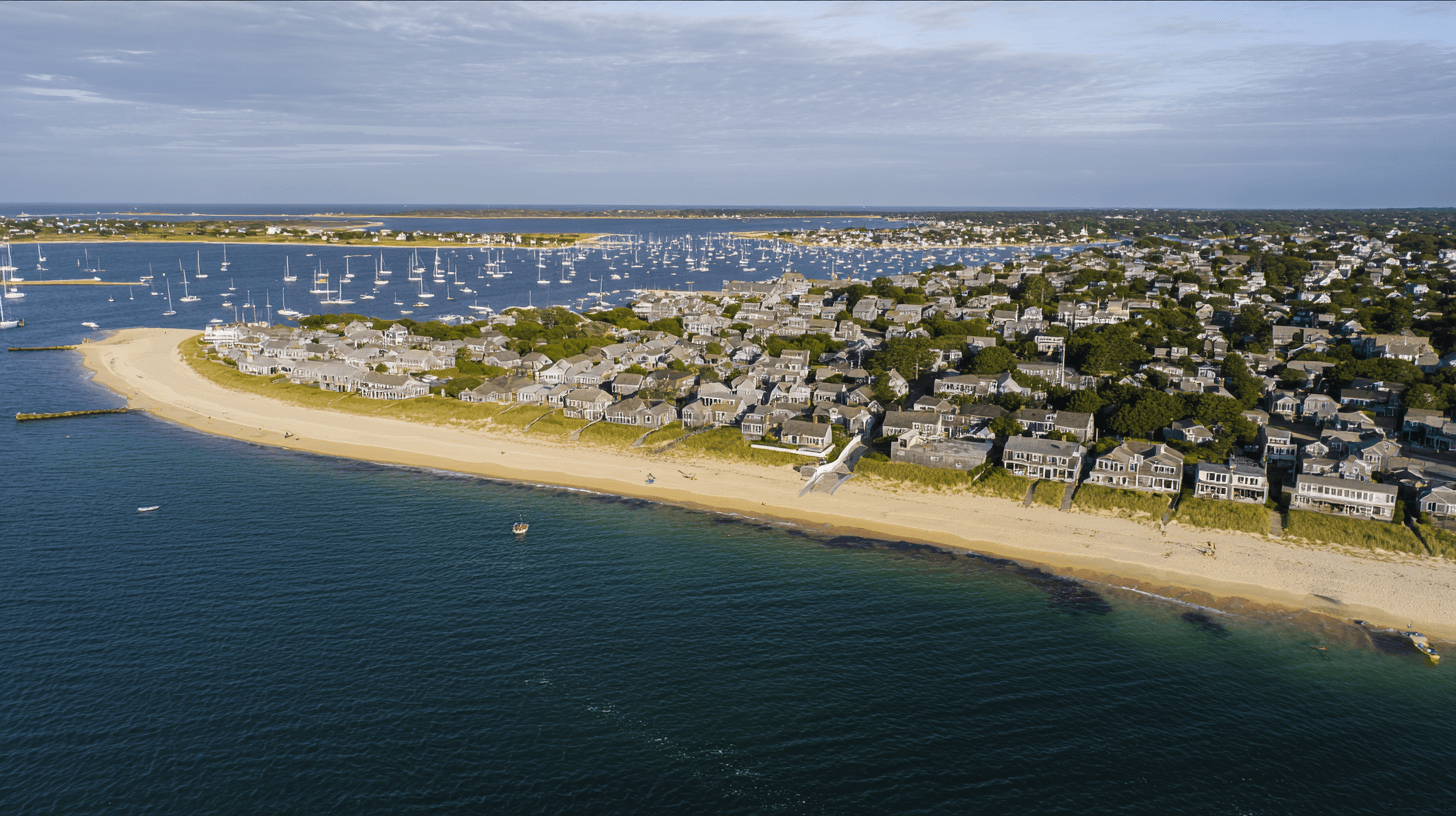
Complete guide to Nantucket rental properties for investors and tenants. Learn about rental income potential, ROI, property management, and tenant opportunities.
Nantucket rental properties represent one of the most compelling investment opportunities in New England real estate, while also offering unique living experiences for tenants seeking island life. Whether you're an investor evaluating rental income potential or a prospective tenant searching for your Nantucket home, this comprehensive guide provides everything you need to know about the island's rental property market.
The Nantucket rental market serves two distinct audiences: investors seeking strong returns from vacation rentals or long-term investments, and tenants looking for seasonal or year-round housing on one of America's most desirable islands. With average Airbnb host revenues exceeding $74,000 annually and a consistently strong demand for both short-term and long-term rentals, Nantucket offers opportunities that few markets can match.
Nantucket Rental Property Market Overview
The Nantucket rental property market operates in a unique ecosystem shaped by the island's location 26 miles off mainland Massachusetts, its designation as a National Historic Landmark District, and its status as one of the premier vacation destinations on the East Coast. In 2024, the island's real estate market recorded $1.36 billion in total sales with an average sale price of $4.86 million, reflecting the premium nature of island properties.
Nantucket rental properties fall into two primary categories: vacation rentals catering to the seasonal tourism market and long-term rentals serving year-round residents, workers, and extended-stay visitors. The vacation rental market thrives from May through September, with peak season commanding premium rates, while the long-term rental market operates year-round with particularly high demand from service industry workers, professionals, and families seeking the island lifestyle.
The rental market dynamics are influenced by several factors unique to Nantucket. The island's limited land area of approximately 48 square miles creates natural scarcity, while strict zoning regulations and historic preservation requirements limit new construction. These constraints, combined with consistently strong demand, create favorable conditions for both rental income and property appreciation.
For investors, Nantucket rental properties offer diversification between seasonal vacation rentals with higher per-night rates and long-term rentals providing stable, predictable income. For tenants, the market offers everything from luxury estates to modest cottages, though competition for quality year-round rentals remains intense given the island's housing challenges.
For Investors: Nantucket Rental Property Investment
Investment Potential and Returns
Nantucket rental properties deliver some of the strongest returns in the vacation rental market. According to recent AirDNA data, the average Airbnb host on Nantucket generates $74,771 in annual revenue, with an average daily rate of $992. These figures place Nantucket among the top vacation rental markets in the United States.
The island's vacation rental market operates on a seasonal model, with the highest returns concentrated in the summer months. Properties with optimal locations, amenities, and marketing can achieve occupancy rates of 73% or higher during peak season, though the island average sits around 38% annually when accounting for the off-season.
Top-performing Nantucket rental properties share several characteristics: proximity to beaches or town, exceptional condition and amenities, professional property management, and strategic pricing. Properties in prime locations like Brant Point, Sconset, or within walking distance of downtown can command daily rates exceeding $1,500 during July and August, with weekly rates for luxury properties reaching $15,000 to $30,000 or more.
The financial appeal extends beyond gross rental revenue. Nantucket's limited supply and consistent demand have historically driven strong property appreciation, with many investors benefiting from both rental income and long-term value increases. Properties purchased a decade ago have often doubled or tripled in value while generating substantial annual rental income.
However, realistic expectations are essential. The $74,771 average annual revenue must be considered against property costs, management fees, maintenance, utilities, insurance, and taxes. A $3 million rental property might generate $100,000 in gross rental income but could incur $50,000 or more in operating expenses, resulting in net income of $50,000 before mortgage costs and taxes.
ROI Analysis and Financial Modeling
Calculating return on investment for Nantucket rental properties requires comprehensive financial modeling that accounts for all revenue sources and expense categories. A realistic analysis includes gross rental income, operating expenses, financing costs, tax implications, and projected appreciation.
Consider a sample investment scenario: A $2.5 million three-bedroom cottage near town generates $85,000 in annual vacation rental revenue (90 nights at $944 average nightly rate). Operating expenses include property management fees at 25% ($21,250), maintenance and repairs ($12,000), utilities ($8,000), insurance ($6,000), property taxes ($15,000), and miscellaneous costs ($5,000), totaling $67,250 in expenses and leaving $17,750 in net operating income before financing.
If the property was purchased with 30% down ($750,000) and financed at 7% interest on a $1.75 million mortgage, annual debt service would be approximately $139,500, creating a negative cash flow of $121,750 in the first year. However, investors should consider the full picture: mortgage principal reduction, tax deductions for mortgage interest and operating expenses, personal use value, and projected appreciation.
The cash-on-cash return in this scenario is negative initially, but the total return including appreciation, equity buildup, and tax benefits can be substantial. If the property appreciates at 4% annually ($100,000), the investor realizes a total first-year return of $96,000 (appreciation plus equity buildup) on a $750,000 investment, representing a 12.8% total return before tax benefits.
Investors should model multiple scenarios including conservative, moderate, and optimistic projections for rental revenue, occupancy rates, operating expenses, and appreciation. Professional financial analysis should account for seasonal cash flow variations, capital improvement needs, and potential rental regulation changes.
The most successful Nantucket rental property investments typically involve properties purchased below market value, properties with value-add potential through renovation or repositioning, or properties where the owner's personal use adds significant non-financial value justifying lower cash returns.
Property Selection Criteria for Rental Investment
Selecting the right Nantucket rental property for investment requires evaluating factors that directly impact rental performance. Location ranks as the primary consideration, with properties near beaches, within walking distance of town, or in desirable neighborhoods like Sconset commanding the highest rates and occupancy.
Walkability is particularly valuable in Nantucket rentals. Properties within a 10-minute walk of downtown or major beaches eliminate the need for renters to rely on cars for every activity, increasing appeal to families and groups. Bike-friendly locations also attract premium rates, as cycling is a preferred mode of island transportation.
Property size and configuration significantly affect rental potential. Three to five-bedroom properties typically offer the best balance of rental income potential and operating efficiency. Very large properties (6+ bedrooms) can command exceptional rates but may have lower occupancy due to a smaller renter pool, while smaller one or two-bedroom properties, though easier to fill, generate lower total revenue.
Outdoor amenities drive Nantucket rental premiums. Properties with private pools, outdoor showers, expansive decks, and professional landscaping consistently outperform comparable homes without these features. A pool can add $200-500 to the nightly rate during peak season, potentially generating an additional $15,000-30,000 in annual revenue.
Interior condition and amenities matter increasingly to discriminating renters. Updated kitchens with high-end appliances, comfortable furnishings, multiple bathrooms, central air conditioning, and strong WiFi are no longer luxuries but requirements for competitive rental properties. Many successful investors budget $100,000-300,000 for renovations and furnishings to position properties for premium rates.
Parking availability is essential. Properties with parking for two or more vehicles meet the needs of most rental groups, while limited parking can reduce appeal. In downtown locations where parking is challenging, clearly communicating parking arrangements prevents booking issues.
Properties with historic charm often command premiums, but investors should carefully evaluate renovation restrictions and maintenance costs associated with historic homes. Some historic properties require specialized maintenance and may face limitations on modifications, affecting both operating costs and rental positioning.
Financing Nantucket Rental Properties
Financing Nantucket rental properties typically requires larger down payments and different loan structures than primary residence purchases. Most lenders classify Nantucket vacation rental properties as investment properties or second homes, requiring 20-30% down payments and charging higher interest rates than primary residence mortgages.
Traditional mortgage financing is available through national banks, regional banks with Nantucket expertise, and specialized lenders familiar with island real estate. Lenders evaluate Nantucket rental properties based on the borrower's income and creditworthiness rather than projected rental income, particularly for properties without established rental history.
Some lenders offer specific vacation rental or investment property loan products that may consider rental income in qualification calculations, though typically only 75% of projected rental income counts toward qualifying income. Borrowers should expect more stringent underwriting and documentation requirements for investment property loans.
Interest rates for Nantucket rental property mortgages typically run 0.5-1.0% higher than primary residence rates, and many lenders impose higher fees or points. Current market rates for investment properties with good credit might range from 7.5-8.5%, though rates fluctuate with market conditions.
Alternative financing options include portfolio loans from private banks that hold loans on their balance sheet rather than selling them, allowing more flexibility in underwriting. High-net-worth borrowers may access more favorable terms through private banking relationships that consider the full financial picture.
Some investors utilize 1031 exchanges to defer capital gains taxes when selling other investment properties and purchasing Nantucket rentals. This strategy allows investors to shift equity from other markets into Nantucket without triggering immediate tax consequences, though strict timing and procedural requirements must be met.
Cash purchases represent a significant portion of Nantucket real estate transactions, eliminating financing contingencies and strengthening offers in competitive situations. Cash buyers can later obtain mortgages if desired, though some choose to keep properties unencumbered to maximize cash flow and flexibility.
Property Management Essentials
Professional property management is essential for most Nantucket rental property investors, particularly those living off-island. Property management companies handle marketing, reservations, guest communication, cleaning, maintenance, and emergency response, allowing owners to generate rental income without daily operational involvement.
Nantucket property management fees typically range from 20-30% of gross rental revenue, with most established firms charging 25%. This fee structure includes booking management, guest services, cleaning coordination, and routine maintenance oversight. Additional fees may apply for specific services like property inspections, capital project management, or off-season caretaking.
Selecting the right property management company directly affects rental performance. Established firms with strong marketing reach, professional websites, relationships with rental agents, and proven systems typically generate higher occupancy and rates than smaller or newer managers. References from other owners and reviews from past guests provide valuable insights into management quality.
Key questions for potential property managers include their marketing approach, technology platforms, cleaning and maintenance standards, financial reporting, owner communication practices, and how they handle guest issues. Understanding their guest screening process, rental agreements, damage deposit policies, and insurance requirements is also essential.
Many successful investors visit Nantucket multiple times during the research phase to meet property managers in person, tour managed properties, and understand operational standards. The property management relationship significantly affects both financial performance and property condition over time, making careful selection crucial.
Some investors choose to self-manage Nantucket rental properties, particularly if they live on-island or nearby and have time for active management. Self-management eliminates the 20-30% management fee but requires significant time investment in marketing, guest communication, cleaning coordination, and maintenance oversight.
Self-managing investors must develop systems for dynamic pricing, calendar management across multiple platforms, cleaning after each turnover, maintenance response, guest issues, and financial tracking. Many use property management software like Guesty, Hostfully, or Lodgify to streamline operations while retaining direct control.
Whether using professional management or self-managing, maintaining strong relationships with reliable cleaners, maintenance contractors, landscapers, and emergency service providers is essential for smooth operations on an island where service providers may be booked weeks in advance during peak season.
Tax Considerations for Rental Property Investors
Nantucket rental property investments involve complex tax considerations that require professional guidance but can significantly affect net returns. Understanding deductions, depreciation, passive activity loss rules, and state tax obligations is essential for optimizing tax efficiency.
Rental property owners can deduct ordinary and necessary expenses including mortgage interest, property taxes, insurance, property management fees, utilities, maintenance and repairs, supplies, advertising, and travel expenses related to property management. These deductions reduce taxable rental income, potentially creating tax losses that offset other income.
Depreciation represents one of the most valuable tax benefits for rental property investors. The IRS allows investors to depreciate residential rental buildings over 27.5 years, creating annual deductions even without cash expenses. A $2.75 million property with $500,000 in land value might generate $81,818 in annual depreciation deductions ($2.25 million building value divided by 27.5 years).
Passive activity loss rules limit the ability to deduct rental real estate losses against ordinary income for high earners. Investors with adjusted gross income below $100,000 can deduct up to $25,000 in rental real estate losses against other income, with this allowance phasing out completely at $150,000 AGI. Above these thresholds, losses generally carry forward to offset future rental income or gains on sale.
Real estate professionals who spend more than 750 hours annually in real estate activities and more time in real estate than other occupations may qualify to treat rental activities as non-passive, allowing full deduction of losses against ordinary income regardless of income level.
Massachusetts requires rental property owners to pay state income tax on rental income, while Nantucket collects property taxes based on assessed values. Property tax rates vary by property type and location, with residential rental properties typically taxed at rates around 0.6-0.7% of assessed value annually.
The Tax Cuts and Jobs Act introduced the Qualified Business Income deduction, allowing many rental property owners to deduct up to 20% of qualified rental income, subject to limitations. This deduction can significantly reduce effective tax rates on rental income for eligible investors.
Investors should consult tax professionals familiar with vacation rental taxation and Massachusetts tax law to structure ownership optimally, maximize legitimate deductions, and ensure compliance with all filing requirements. Entity selection (individual ownership, LLC, S-corporation) can affect taxation and should be evaluated based on individual circumstances.
For Tenants: Finding and Securing Nantucket Rentals
Finding Available Rental Properties
Finding quality Nantucket rental properties requires utilizing multiple search channels and acting quickly when desirable options become available. The island's rental market moves rapidly, particularly for year-round rentals and peak-season vacation properties, making an organized search approach essential.
For vacation rentals, online platforms like Airbnb, VRBO, and specialized Nantucket rental sites like Nantucket Accommodations offer extensive inventories. These platforms allow filtering by location, dates, price, amenities, and property type, making it easy to identify properties matching specific requirements.
Many Nantucket real estate agencies maintain rental divisions representing owners of vacation and long-term properties. Agencies like Jordan Real Estate, Great Point Properties, and others maintain listings and can provide personalized assistance matching renters with appropriate properties. Establishing relationships with rental agents can provide access to properties before they're publicly listed.
For year-round rentals, the search requires more persistence and creativity. While online listings exist, many year-round rentals are filled through word-of-mouth, direct landlord relationships, or connections within the Nantucket community. Joining local Facebook groups like "Nantucket Housing" or "Nantucket Community Board" provides access to rental postings and networking opportunities.
The Nantucket newspaper and local bulletin boards occasionally feature rental listings, particularly for long-term properties. Some landlords prefer traditional advertising to screen for tenants connected to the island community rather than transient renters.
Timing significantly affects rental availability. For vacation rentals, booking 6-12 months in advance for peak summer weeks ensures the best selection, while shoulder season (May, June, September) offers more last-minute availability. For year-round rentals, September through November typically sees more turnover as seasonal workers leave and property owners decide on winter rental plans.
Our team at John Trudel Real Estate specializes in connecting renters with quality Nantucket rental properties across all categories. Whether you're seeking a summer vacation home or year-round residence, we provide personalized guidance throughout the rental search and application process. Contact us to discuss your rental needs.
What to Expect: Rental Terms and Conditions
Nantucket rental properties come with terms and conditions that reflect the island's unique market dynamics and seasonal nature. Understanding typical rental structures, costs, and expectations helps renters budget appropriately and avoid surprises.
Vacation rental rates vary dramatically by season. Peak summer weeks (late June through August) command the highest rates, often 2-3 times shoulder season rates. A property renting for $8,000 per week in July might rent for $3,000 per week in May or October. Most vacation rentals require minimum stays of one week during peak season, while off-season minimums may be 2-3 nights.
Security deposits for vacation rentals typically range from $1,000-5,000 depending on property value, with higher-end properties requiring larger deposits. Damage deposit policies vary, but most properties inspect after checkout and return deposits within 14-30 days if no damage occurred beyond normal wear and tear.
Cleaning fees are standard for vacation rentals, typically ranging from $300-800 depending on property size. Some properties include cleaning in the rental rate, while others charge separately. Renters should clarify whether cleaning fees are one-time or per-stay charges.
Year-round rental terms follow more traditional residential models, though with Nantucket-specific characteristics. Most year-round rentals require 12-month leases, with some landlords offering 9-month leases (September through May) to retain flexibility for summer vacation rentals. Monthly rents for year-round properties typically range from $2,000-6,000 depending on size, location, and condition.
Security deposits for year-round rentals typically equal one month's rent, with first month, last month, and security deposit commonly required upfront (three months total). Massachusetts law limits security deposits to one month's rent and requires landlords to hold deposits in interest-bearing accounts, returning them with interest within 30 days of lease termination.
Utility arrangements vary by property. Vacation rentals typically include all utilities in the rental rate, while year-round rentals may require tenants to pay for electricity, oil/gas heating, and cable/internet. Clarifying utility responsibilities before signing prevents budget surprises, as island utilities, particularly heating oil, can be expensive.
Pet policies vary significantly among Nantucket rental properties. Many vacation rentals prohibit pets entirely, while others allow dogs with additional fees ($200-500) and deposits. Year-round rentals may be more flexible with pets, particularly for long-term tenants, though breed restrictions and size limits are common.
Parking policies should be confirmed before booking. Some properties provide ample parking, while others, particularly in-town locations, may have limited spaces. Street parking in Nantucket Town is restricted in many areas, making off-street parking valuable.
The Application and Approval Process
Securing a Nantucket rental property, particularly for year-round tenancy, requires navigating an application and approval process that may be more rigorous than mainland rentals due to high demand and limited inventory.
For vacation rentals, the process is typically straightforward: select dates, provide payment information, sign rental agreements, and pay required deposits and fees. Payment schedules vary, but common structures include 50% deposit upon booking and remaining balance 30-60 days before arrival.
Year-round rental applications require more extensive documentation. Landlords typically request completed application forms, proof of income (recent pay stubs, tax returns, or employment letters), credit reports, rental history with references from previous landlords, and personal references. Some landlords conduct background checks and verify employment directly.
Income requirements for year-round Nantucket rentals often exceed typical 3x monthly rent standards due to high living costs. Landlords may require income of 4-5x monthly rent, recognizing that tenants must also cover utilities, transportation, food, and other island expenses that exceed mainland costs.
Credit requirements vary by landlord, but most prefer tenants with good credit (scores above 650-700) and no recent evictions, bankruptcies, or significant derogatory marks. Applicants with credit challenges may need to provide additional deposits, co-signers, or several months rent in advance to secure properties.
The competitive nature of year-round Nantucket rentals means applications should be complete, professional, and submitted promptly. Properties may receive multiple applications within hours of listing, with landlords selecting tenants based on qualifications, stability indicators, and perceived fit with the property and community.
References from previous landlords carry significant weight. Providing contact information for 2-3 previous landlords who can speak to timely rent payment, property maintenance, and tenancy conduct strengthens applications substantially.
For seasonal workers seeking year-round or seasonal housing, some employers assist with housing searches or provide employee housing, reducing individual rental search burden. Connecting with potential employers early in the job search process and inquiring about housing assistance can open opportunities not available through traditional rental markets.
Nantucket Rental Property Types
Single-Family Homes for Rent
Single-family homes represent the largest segment of Nantucket rental properties, ranging from modest three-bedroom cottages to sprawling estates. These properties appeal to families, groups of friends, and individuals seeking complete homes with privacy and full amenities.
Rental rates for single-family homes vary widely based on size, location, condition, and amenities. A typical three-bedroom cottage in mid-island locations might rent for $4,000-7,000 per week during peak summer or $2,500-4,500 monthly for year-round tenancy. Luxury homes in prime locations can command $15,000-30,000+ weekly during July and August.
Single-family rental homes typically include full kitchens, multiple bathrooms, living and dining areas, outdoor spaces, and parking. Many feature Nantucket's characteristic architecture including cedar shingles, widow's walks, and nautical details. Outdoor amenities often include decks, patios, outdoor showers, and landscaped yards.
The appeal of single-family rentals includes privacy, space for groups, full amenities without shared facilities, and authentic Nantucket living experiences. Families particularly value single-family rentals for vacation stays, as they provide room for children, outdoor play space, and flexibility for different family member schedules and activities.
For investors, single-family homes offer strong rental potential if properly positioned. Properties within walking distance of town or beaches achieve the highest occupancy and rates, while mid-island properties appeal to value-conscious renters and those seeking quiet retreats.
Condominiums and Multi-Family Properties
Nantucket's condominium and multi-family rental market offers alternatives to single-family homes, often at lower price points with reduced maintenance responsibilities for investors. Condominiums range from in-town units in historic buildings to resort-style complexes with pools and amenities.
Rental rates for condominiums typically fall below single-family homes of comparable size, with two-bedroom in-town condos renting for $2,500-5,000 weekly in peak season or $2,000-3,500 monthly year-round. Luxury condominium developments command higher rates, particularly those with resort amenities.
Condominium investments offer several advantages: lower entry prices than single-family homes, reduced maintenance responsibility with exterior and common area care handled by associations, and amenity access that individual properties couldn't provide. However, condominium association fees (typically $300-800+ monthly) must be factored into investment returns.
For renters, condominiums can provide excellent value, particularly for couples or small families who don't need extensive space. In-town condominiums offer walkability advantages, while resort-style condos provide amenities like pools, tennis courts, and fitness facilities.
Multi-family properties, while less common in Nantucket's rental market, offer investors opportunities to generate income from multiple units. Some historic homes have been converted to multi-unit configurations, providing income from several rental streams. However, strict zoning regulations limit multi-family conversions, and existing multi-family properties command premium prices.
Cottages and Guest Houses
Nantucket cottages and guest houses represent charming, often historic rental options ranging from tiny single-room cottages to substantial homes. The term "cottage" in Nantucket doesn't necessarily mean small; some cottages are substantial homes, while others are truly modest structures.
Cottage rentals appeal to different market segments. Small cottages attract couples seeking romantic getaways or individuals enjoying solo island retreats. Larger cottages accommodate families wanting quintessential Nantucket charm. Guest houses, typically located on the same property as a main house but with separate entrances and facilities, offer privacy at potentially lower costs than full homes.
For investors, smaller cottages can provide strong returns relative to purchase price, as they often cost less to acquire and maintain while still generating meaningful rental income. A well-located cottage purchased for $1.5 million might generate $50,000-70,000 in annual vacation rental revenue with relatively low operating costs.
Seasonal rental strategies work particularly well for cottages. Properties might rent as vacation rentals during summer months at premium rates, then transition to winter rentals for island workers at reduced monthly rates, maintaining year-round income streams with minimal vacancy.
Luxury Estate Rentals
Nantucket luxury estate rentals represent the pinnacle of the island rental market, featuring expansive homes with exceptional amenities, prime locations, and impeccable finishes. These properties cater to affluent travelers seeking ultimate comfort, privacy, and style.
Luxury estates typically include 5+ bedrooms, 5+ bathrooms, gourmet kitchens, high-end furnishings, resort-style pools, extensive outdoor living spaces, water views or beach access, and sometimes additional features like home theaters, wine cellars, or spa facilities. Properties in Sconset with ocean views or beachfront compounds command the highest premiums.
Weekly rental rates for luxury estates range from $20,000-50,000+ during peak season, with the most exceptional properties exceeding $75,000 per week. Year-round rentals of luxury estates are less common, as most owners use properties personally or focus on vacation rental income.
For investors, luxury estates require significant capital (purchases typically exceeding $5 million and often $10 million+) but can generate substantial gross income. A property commanding $30,000 weekly during peak season and achieving 12 weeks of bookings generates $360,000 in peak season revenue alone, with shoulder season adding meaningful additional income.
The luxury rental market attracts repeat clientele who return annually, often booking the same property and weeks year after year. Building relationships with high-net-worth renters and providing exceptional service creates income stability that justifies premium property investments.
Market Analysis and Trends
Current Rental Market Conditions
The Nantucket rental property market in 2025 remains robust despite broader economic uncertainties, reflecting the island's appeal to affluent travelers and the limited supply of quality properties. Vacation rental demand recovered strongly following the pandemic and has sustained elevated levels as luxury travel remains prioritized by high-net-worth individuals.
Occupancy rates for well-managed vacation rentals averaging 38% annually mask the reality that top-performing properties achieve 60-80% occupancy when accounting for owner usage blocks and seasonal focus. The average conceals a bifurcated market where exceptional properties with strong locations and management achieve occupancy and rates far exceeding the average, while dated or poorly located properties struggle.
Daily rates averaging $992 represent year-round figures including off-season. Peak season rates for quality properties typically range from $1,200-2,500 per night, with luxury properties exceeding $3,000-5,000 nightly. Shoulder season rates (May, June, September, October) typically fall to $600-1,500 nightly depending on property quality.
The year-round rental market remains extremely tight, with vacancy rates near zero for quality properties. Service industry workers, professionals, and families seeking year-round housing compete for limited inventory, creating multiple-application scenarios for desirable properties. This dynamic has driven year-round rental rates up significantly, with average 2-bedroom properties now commanding $3,000-4,000 monthly.
Supply constraints continue shaping the market. Limited new construction due to zoning restrictions, high development costs, and land scarcity means inventory grows slowly. Most "new" rental inventory comes from properties transitioning from owner-occupied to rental status or improvements to existing rental properties.
Emerging Trends and Opportunities
Several trends are reshaping Nantucket's rental property market, creating opportunities for informed investors and affecting tenant experiences. Understanding these trends helps stakeholders position for success in evolving market conditions.
Dynamic pricing has become essential for vacation rental success. Top-performing property managers use sophisticated pricing software that adjusts rates daily based on demand, booking pace, competitive positioning, events, and weather forecasts. This approach maximizes revenue but requires technology and expertise that self-managing owners may lack.
Extended stays are growing in popularity. Remote work flexibility has enabled professionals to rent Nantucket properties for 1-3 months, particularly during shoulder seasons when rates are more accessible. These bookings provide stable income, reduce turnover costs, and fill periods that might otherwise see lower occupancy.
Luxury amenities continue differentiating properties. Pools, hot tubs, high-end outdoor furniture, professional landscaping, and resort-quality finishes command premiums that justify their costs. Properties without these features increasingly compete on price rather than premium positioning.
Sustainability and energy efficiency are emerging differentiators. Properties with solar panels, efficient HVAC systems, LED lighting, and sustainable practices appeal to environmentally conscious renters while reducing operating costs. Some owners market sustainability as a feature, attracting renters aligned with these values.
Rental regulation discussions at both local and state levels create uncertainty. While Nantucket has not implemented restrictive vacation rental regulations like some communities, ongoing discussions about housing affordability, community character, and taxation could affect the rental market. Investors should monitor regulatory developments.
The investment landscape is seeing more sophisticated buyers entering the market. Institutional investors, family offices, and high-net-worth individuals are increasingly evaluating Nantucket rental properties as alternative investments, bringing professional underwriting standards and long-term holding strategies.
For detailed market analysis and investment guidance tailored to your specific situation, our investment consulting services provide comprehensive evaluation of Nantucket rental property opportunities.
Seasonal vs. Year-Round Rental Strategies
Nantucket rental property investors face strategic decisions about seasonal vacation rentals versus year-round residential rentals, with each approach offering distinct advantages, challenges, and financial profiles.
Seasonal vacation rental strategies focus on maximizing income during peak summer months and potentially shoulder seasons while accepting vacancy during winter months. This approach generates higher gross revenue per night but requires intensive property management, frequent turnovers, higher marketing costs, and acceptance of seasonal cash flow patterns.
A pure vacation rental strategy might generate $80,000-120,000 in gross revenue for a quality 3-4 bedroom home, concentrated in 15-20 weeks of bookings. Operating expenses including 25% management fees, maintenance, utilities, insurance, and taxes might total $50,000-70,000, leaving $30,000-50,000 in net operating income before financing.
Year-round rental strategies provide stable, predictable monthly income with single annual turnovers, lower management intensity, and reduced marketing needs. However, monthly rental rates typically generate lower gross revenue than the same property could achieve through vacation rentals, and lease commitments prevent personal use.
A year-round rental strategy for the same property might generate $45,000-60,000 in annual rent ($3,750-5,000 monthly), with operating expenses of $25,000-35,000 (no management fees if self-managed, but including maintenance, insurance, and taxes), leaving $20,000-25,000 in net operating income before financing.
Hybrid strategies combine elements of both approaches. Some owners vacation-rent properties during peak summer months (generating $50,000-70,000 in 10-12 peak weeks), then switch to off-season monthly rentals (generating $20,000-30,000 in 6-8 months at $2,500-4,000 monthly), creating diversified income streams of $70,000-100,000 annually.
The optimal strategy depends on investor objectives, property characteristics, personal use desires, and risk tolerance. Vacation rentals maximize financial returns but require active management and acceptance of seasonality. Year-round rentals provide stability and lower management burden but limit upside. Hybrid approaches balance these factors but require more complex management transitions.
For personalized analysis of which rental strategy aligns with your investment goals and property characteristics, schedule a consultation with our investment team.
Frequently Asked Questions
How much can I make from a Nantucket rental property?
Nantucket rental property income varies significantly based on property type, location, amenities, and rental strategy. The average Airbnb host generates $74,771 annually with an average daily rate of $992, though top-performing properties in prime locations exceed $100,000-150,000 in gross revenue. Year-round rental strategies typically generate $40,000-75,000 annually depending on property size and quality. Net income after expenses (management fees, maintenance, insurance, taxes, utilities) typically represents 40-60% of gross revenue.
What are typical property management fees in Nantucket?
Professional property management companies in Nantucket typically charge 20-30% of gross rental revenue, with 25% being the market standard. This fee includes marketing, reservation management, guest communication, cleaning coordination, routine maintenance oversight, and financial reporting. Additional fees may apply for specific services like off-season property checks, capital project management, or owner bookings. Self-managing eliminates these fees but requires significant time investment and local presence or reliable service provider relationships.
Are there restrictions on vacation rentals in Nantucket?
Currently, Nantucket does not impose significant restrictions on vacation rentals beyond standard zoning and safety requirements. Property owners can generally rent their properties short-term without special permits or licensing, though this could change as the town continues discussing housing policy. Some homeowner associations or deed restrictions may limit rentals, so investors should verify property-specific rules. The town requires collection and remittance of 14.45% combined state and local lodging taxes on vacation rentals under 31 days.
What's the best location for a Nantucket rental property investment?
The best location depends on your investment strategy and target market. For vacation rentals, proximity to beaches or downtown Nantucket generates highest rates and occupancy. Brant Point, Sconset, Surfside, and in-town properties command premium rates. Mid-island properties offer lower entry prices and appeal to value-conscious renters. For year-round rentals, locations with practical access to town and employment centers are most desirable. Walking or biking distance to amenities increases rental appeal across all property types.
How difficult is it to find year-round housing as a tenant in Nantucket?
Finding quality year-round housing in Nantucket is challenging due to extremely limited inventory and high demand. Vacancy rates near zero mean renters must act quickly when properties become available, often competing with multiple applicants. Starting the search several months before needed move-in dates, utilizing multiple search channels including local connections and rental agents, having complete application materials ready, and offering strong references increases success likelihood. Flexibility on location, willingness to consider roommate situations, and realistic budget expectations also help.
What occupancy rate should I expect for a Nantucket vacation rental?
Occupancy rates for Nantucket vacation rentals vary widely based on property quality, location, pricing, and management. The island average sits around 38% annually, though this includes off-season when many properties don't actively rent. Top-performing properties in prime locations with professional management achieve 60-80% occupancy when accounting for weeks the owner blocks for personal use. Realistic expectations for quality properties include 70-80% occupancy during peak season (8-10 weeks of bookings) and 20-40% occupancy during shoulder seasons, with minimal winter bookings unless specifically marketed for holidays or special events.
How do I handle taxes on Nantucket rental income?
Nantucket rental property owners must collect and remit 14.45% in combined Massachusetts state (5.7%) and local (8.75%) lodging taxes on vacation rentals under 31 days. This requires registering for tax accounts, collecting taxes from renters, filing quarterly returns, and remitting collected amounts. Rental income must be reported on federal and state tax returns, though numerous deductions are available including mortgage interest, property taxes, insurance, management fees, maintenance, utilities, depreciation, and travel expenses related to property management. Professional tax guidance from advisors familiar with vacation rental taxation is strongly recommended to ensure compliance and optimize deductions.
Can I use my rental property personally while also renting it?
Yes, most Nantucket rental property investors maintain personal use rights while generating rental income. However, personal use affects tax treatment. Properties used personally more than 14 days or 10% of total rental days (whichever is greater) are classified as mixed-use properties with limitations on loss deductions. Strategic planning around personal use timing and duration optimizes both enjoyment and tax benefits. Many investors block prime weeks for family use while renting other peak weeks, or focus personal use during shoulder seasons when rental rates are lower, minimizing opportunity cost.
What insurance is required for Nantucket rental properties?
Nantucket rental properties require specialized insurance coverage beyond standard homeowner's policies. Vacation rental properties need landlord or rental dwelling policies covering property damage, liability, and loss of rental income. Most policies require minimums of $1-2 million in liability coverage, with many investors carrying $3-5 million or umbrella policies. Additional coverage for pools, hot tubs, and high-value contents may be necessary. Vacation rental insurance typically costs 2-3 times standard homeowner's rates due to increased risk from frequent occupant turnover. Year-round rental properties need landlord policies covering property damage and liability but may cost less than vacation rental coverage.
Should I buy a property specifically for rental income or one I'll also use personally?
This decision depends on your financial goals, personal priorities, and budget. Pure investment purchases should be evaluated strictly on financial metrics including cap rates, cash-on-cash returns, appreciation potential, and total return. Properties you'll also use personally should factor in the value of personal use and lifestyle benefits that pure ROI calculations don't capture. Many successful Nantucket investors prioritize properties they'll genuinely enjoy while ensuring rental income covers most or all carrying costs. Properties purchased solely for rental income may be in locations the owner wouldn't personally prefer but that generate stronger rental returns. Contact our team to discuss your specific situation and goals.
Invest in Nantucket's Premier Rental Market
Nantucket rental properties offer compelling opportunities for investors seeking strong returns in one of America's most desirable resort markets, while providing wonderful living experiences for tenants drawn to island life. Whether you're evaluating rental property investments or searching for your Nantucket home, success requires understanding the unique characteristics of the island's rental market and working with knowledgeable professionals.
The combination of limited supply, consistent demand from affluent travelers, strong historical appreciation, and lifestyle appeal creates a rental property market with resilience and upside that few locations match. For investors with appropriate capital, long-term perspective, and professional management, Nantucket rentals deliver both financial returns and personal enjoyment.
For those seeking to rent on Nantucket, whether for summer vacations or year-round residence, early planning, flexibility, and persistence increase success in securing quality properties. Understanding market dynamics, typical terms, and application requirements positions renters to act decisively when ideal properties become available.
At John Trudel Real Estate, we specialize in Nantucket rental properties from both investor and tenant perspectives. Our comprehensive rental property listings showcase available opportunities, while our investment advisory services provide detailed analysis for investors evaluating the Nantucket market.
Whether you're considering your first Nantucket rental property investment, expanding an existing portfolio, or searching for the perfect island rental, our team provides the local expertise, market knowledge, and personalized service that leads to successful outcomes.
For more information about Nantucket rental opportunities, detailed market analysis, or personalized guidance matching your specific needs, contact us today. Let us help you navigate Nantucket's rental property market with confidence and success.
For additional insights into the Nantucket rental market, explore our comprehensive guide to Nantucket homes for rent, which provides detailed information about finding and securing rental properties on the island. For information about rental duration options, see our guide to long-term and short-term Nantucket home rentals.
Work with a Nantucket Expert
Looking for your Nantucket home? John Trudel has been helping buyers find their perfect island property for over 29 years. With deep local knowledge of every neighborhood, pricing trend, and historic consideration, he provides the guidance you need to make a confident decision.
Schedule a consultation to discuss your goals, or browse current listings to start exploring.