Complete guide to Nantucket ferry services, schedules, and air travel options. Learn how transportation access affects real estate decisions, property values, and daily island living.
The Nantucket ferry is the lifeline connecting island residents to the mainland. Located 26 miles off the coast of Cape Cod, Nantucket depends on reliable ferry service and air travel for everything from daily commutes to grocery deliveries to construction materials. Understanding how transportation works is not just practical knowledge — it is an essential factor in every real estate decision on the island.
Whether you are considering a permanent move, a seasonal residence, or an investment property, transportation access shapes your daily experience and long-term satisfaction with island living. This guide covers every option for getting to Nantucket, from ferry operators and schedules to air travel, and explains how these realities influence the property market. For a broader view of what daily life looks like, see our complete guide to island life.
Steamship Authority: The Primary Ferry Service
The Steamship Authority is the only ferry operator authorized to carry vehicles to Nantucket, making it the backbone of island transportation. Operating year-round from Hyannis, the Steamship Authority offers two distinct services that serve different needs.
Traditional Car and Passenger Ferry
The traditional ferry carries both vehicles and passengers on a 2 hour and 15 minute crossing between Hyannis and Nantucket. This is the only way to bring a car, truck, or commercial vehicle to the island by water.
2026 pricing:
- Adult: $21.50 one-way / $43 round-trip
- Child (5-12): $11 one-way / $22 round-trip
- Children under 5: Free
- Bicycle: $8.50 one-way / $17 round-trip
- Automobile (under 17 feet): $205 one-way / $410 round-trip
The traditional ferry departs Hyannis multiple times daily, with typical departures at 9:15 a.m., 2:45 p.m., and 8:00 p.m. Return trips from Nantucket depart at 6:30 a.m., 12:00 p.m., and 5:30 p.m. Schedules expand significantly during summer months with additional departures.
High-Speed Passenger Ferry (M/V Iyanough)
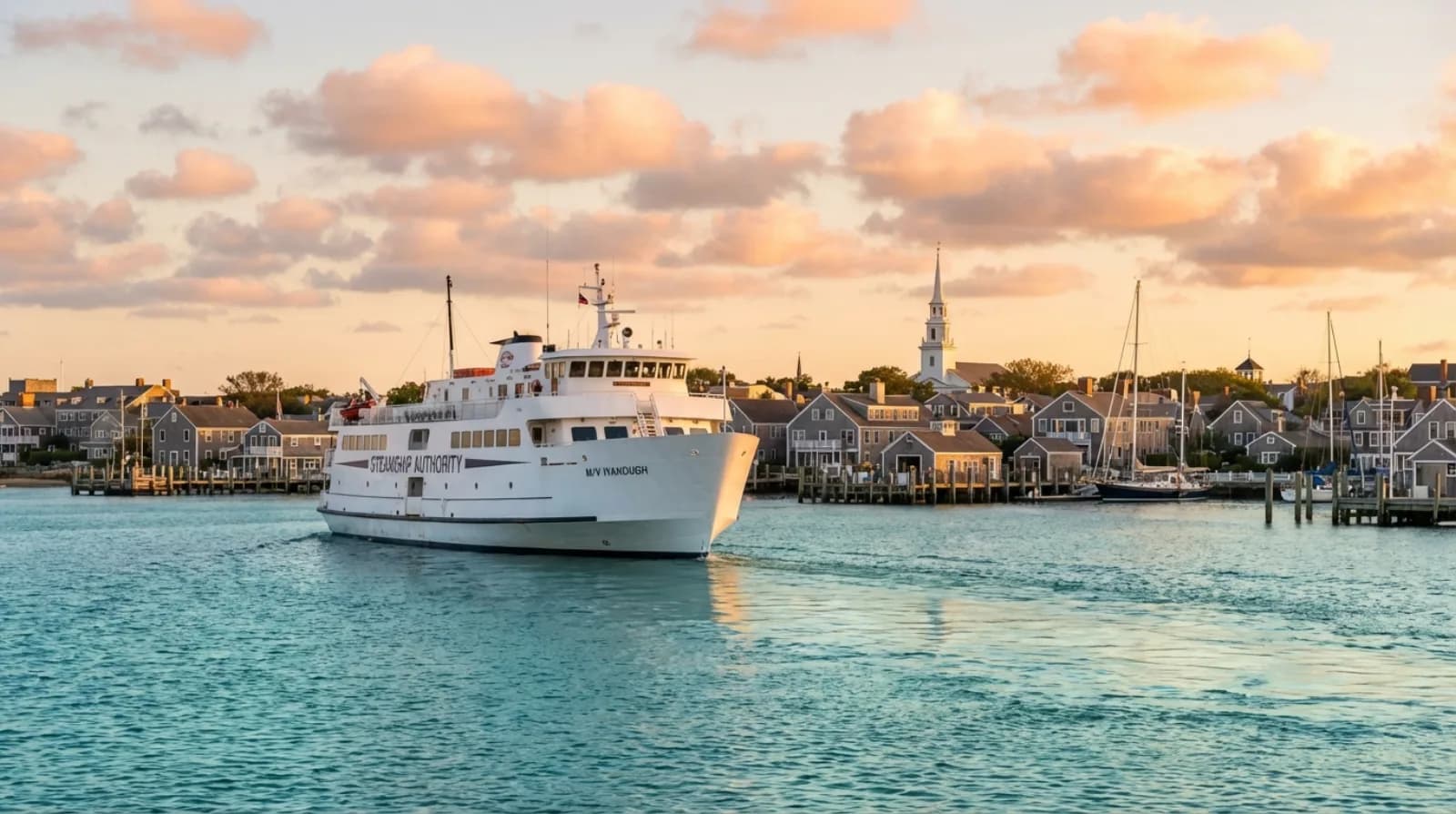
The Steamship Authority's high-speed catamaran, the M/V Iyanough, makes the crossing in approximately 1 hour. This passenger-only vessel operates seasonally, typically from late spring through early fall, with five or more daily departures during peak season.
2026 pricing:
- Adult: $46.50 one-way / $89 round-trip
- Child (5-12): $23.75 one-way / $45 round-trip
- Children under 5: Free
For reservations and current schedule information, contact the Steamship Authority at (508) 477-8600 or visit their website.
Hy-Line Cruises: High-Speed Alternative
Hy-Line Cruises has provided ferry service to Nantucket since 1973 and year-round service since 1995. Operating from a separate terminal in Hyannis, Hy-Line offers high-speed catamaran service with a crossing time of approximately 1 hour.
Hy-Line runs multiple daily departures, with up to nine trips per day during summer. Typical departures include 6:10 a.m., 9:05 a.m., 11:55 a.m., 3:05 p.m., and 7:00 p.m., though the schedule varies by season.
2026 pricing:
- Adult: $49 one-way / $91 round-trip
- Child (5-12): $31 one-way / $55 round-trip
- Children under 5: Free
- Bicycle: $8 one-way / $16 round-trip
Hy-Line also operates an inter-island ferry connecting Nantucket and Martha's Vineyard during summer months — a convenient option for island-hopping day trips.
For reservations, contact Hy-Line Cruises at (800) 492-8082. Their terminal is located at 220 Ocean Street in Hyannis.
Additional Ferry Options
Seastreak offers seasonal high-speed service from New Bedford, Massachusetts, providing an alternative departure point that avoids Cape Cod traffic. Adult round-trip fares start at $104, with island resident discounts available at $96 round-trip. The New Bedford route is particularly valuable during peak summer weekends when Route 6 and Route 28 to Hyannis become heavily congested.
Freedom Cruise Line operates seasonal service from Harwich Port, offering yet another alternative for reaching Nantucket without navigating Hyannis traffic.
Seasonal Schedule Variations
The Nantucket ferry schedule changes significantly between seasons, and understanding these patterns is critical for anyone considering island property.
Peak Season (June through September): Maximum service with the most departures across all operators. High-speed options run frequently, and the Steamship Authority adds traditional ferry departures. Car reservations during this period sell out months in advance — often within hours of opening day.
Shoulder Season (April-May, October-November): Reduced but still regular service. High-speed ferries begin or wind down operations. This period offers easier travel with fewer crowds, which many year-round residents consider the best time on the island.
Off-Season (December through March): Limited service with only the Steamship Authority traditional ferry operating reliably. Weather cancellations become more frequent, and some days may see reduced schedules. Year-round residents plan around these realities, keeping essential supplies on hand and maintaining flexibility with travel plans.
For a deeper understanding of how seasonal rhythms affect island life, including cost of living considerations, transportation is one of the most significant factors.
Car Ferry vs. Passenger-Only: What Residents Need to Know
One of the first decisions new island residents face is whether to keep a car on Nantucket. This choice affects everything from which ferry you take to where you choose to live.
Bringing a vehicle requires booking the Steamship Authority traditional ferry well in advance. Summer car reservations open in late January or early February each year and sell out rapidly — average wait times on opening day have exceeded two hours. Standby travel is available year-round but is unpredictable, particularly in summer.
Going car-free is a viable option for residents in walkable areas. Properties in Downtown Nantucket offer pedestrian access to shops, restaurants, and services, reducing the need for a vehicle. Many residents use bicycles, mopeds, or the NRTA Wave shuttle bus system for daily transportation around the island.
The practical middle ground that many residents adopt is keeping a car on-island while using passenger ferries for most trips to the mainland. A vehicle parked at the Hyannis terminal lot allows you to drive on the Cape Cod side, while you take the faster, more affordable high-speed ferry for the crossing itself.
Properties in more remote areas like Madaket or Polpis generally require a vehicle, which factors into the ferry logistics and costs that homeowners manage year-round.
Air Travel Options
Ferry service is the primary mode of transportation, but Nantucket Memorial Airport (ACK) provides air access that many residents — particularly those commuting to Boston or New York — consider essential.
Cape Air
Cape Air operates daily flights to Nantucket year-round from Boston (BOS) and seasonally from New York JFK and Westchester County. Flight times from Boston run approximately 30 minutes, making it the fastest way to reach the island. Cape Air uses small Cessna aircraft, with fares typically ranging from $150 to $300 one-way depending on season and demand.
JetBlue
JetBlue provides seasonal jet service connecting Nantucket to Boston (BOS), New York (JFK, LGA, and EWR), and Washington D.C. (DCA). Summer service runs from approximately June through September, offering competitive fares on larger aircraft.
Private Aviation
Nantucket's airport accommodates private aircraft, and private charter services operate regularly. For high-net-worth buyers, private aviation access often factors into the property search — proximity to the airport and ease of access become location criteria alongside waterfront views and neighborhood character.
How Transportation Affects Real Estate Decisions
Understanding Nantucket transportation is not academic for property buyers — it directly influences which properties make sense and how you will experience island ownership.
Year-round residents prioritize reliable access. Properties near downtown or in walkable neighborhoods reduce dependence on car ferry logistics. Proximity to the ferry terminals — both the Steamship Authority and Hy-Line docks are located in Nantucket Town — adds convenience for frequent travelers.
Seasonal residents often weigh ferry convenience against neighborhood preferences. A property in Sconset offers a distinct experience from downtown, but it means a 20-minute drive to the ferry terminals. Understanding this tradeoff helps buyers choose locations that align with how they actually plan to use the island. Our neighborhoods guide breaks down each area's character and proximity to key services.
Investment property owners should understand that transportation costs and logistics affect both rental demand and property management. Properties marketed as vacation rentals benefit from clear transportation instructions for guests, and proximity to ferry terminals can influence rental pricing and occupancy.
Construction and renovation on Nantucket requires transporting materials by car ferry, which adds time and cost to any project. Contractors must coordinate ferry reservations for vehicles and equipment, and summer ferry constraints can impact project timelines. This is a practical consideration for anyone purchasing a property that needs work.
For buyers weighing all these factors, exploring homes currently for sale with transportation access in mind adds a practical lens to the search. Those planning a permanent move should also review our relocation guide for additional logistics beyond transportation.
Frequently Asked Questions
How long is the ferry ride to Nantucket?
The high-speed ferry from Hyannis to Nantucket takes approximately 1 hour on both the Steamship Authority M/V Iyanough and Hy-Line Cruises catamarans. The traditional Steamship Authority car ferry takes 2 hours and 15 minutes. Seastreak from New Bedford runs approximately 1 hour. Weather conditions can occasionally affect crossing times.
How far in advance should I book a car ferry reservation?
For summer travel (June through September), car reservations through the Steamship Authority should be booked as soon as they open — typically late January or early February. Summer vehicle reservations sell out within hours of opening day. For off-season travel, booking one to two weeks in advance is usually sufficient, though holiday weekends fill quickly.
Can I live on Nantucket without a car?
Yes, many residents live comfortably without a vehicle, particularly in Downtown Nantucket where shops, restaurants, and services are within walking distance. The NRTA Wave shuttle system provides bus service across the island, and bicycles are a primary mode of transportation from spring through fall. However, residents in outlying areas generally find a vehicle necessary for daily life.
What happens when ferries are cancelled due to weather?
Weather cancellations occur most frequently during winter storms and nor'easters. When ferries are cancelled, the Steamship Authority works to accommodate passengers on the next available departure. Year-round residents maintain a practice of keeping essential supplies stocked and building flexibility into travel plans. Air travel via Cape Air can sometimes serve as a backup, though small aircraft are also affected by severe weather.
How does transportation affect Nantucket property values?
Transportation access is a meaningful factor in Nantucket property values. Properties within walking distance of the ferry terminals in Nantucket Town command premiums for their convenience, particularly among buyers who travel frequently to the mainland. Conversely, more remote properties offer greater privacy and space at different price points. The overall limited access to the island — with only ferry and air connections — contributes to Nantucket's exclusivity and supports property values across all neighborhoods.
Start Your Nantucket Property Search
Transportation logistics are one piece of the puzzle when evaluating Nantucket real estate. The right property balances location, lifestyle, and practical access in a way that matches how you plan to use the island.
Whether you are a frequent commuter who needs ferry terminal proximity, a seasonal resident seeking a quiet retreat, or an investor evaluating rental potential, understanding transportation realities helps you make a confident decision.
Browse current Nantucket listings to see what is available, or schedule a consultation to discuss how transportation and other lifestyle factors should shape your property search. You can also contact us directly with any questions about getting to and living on Nantucket.
Work with a Nantucket Expert
Looking for your Nantucket home? John Trudel has been helping buyers find their perfect island property for over 29 years. With deep local knowledge of every neighborhood, pricing trend, and historic consideration, he provides the guidance you need to make a confident decision.
Schedule a consultation to discuss your goals, or browse current listings to start exploring.