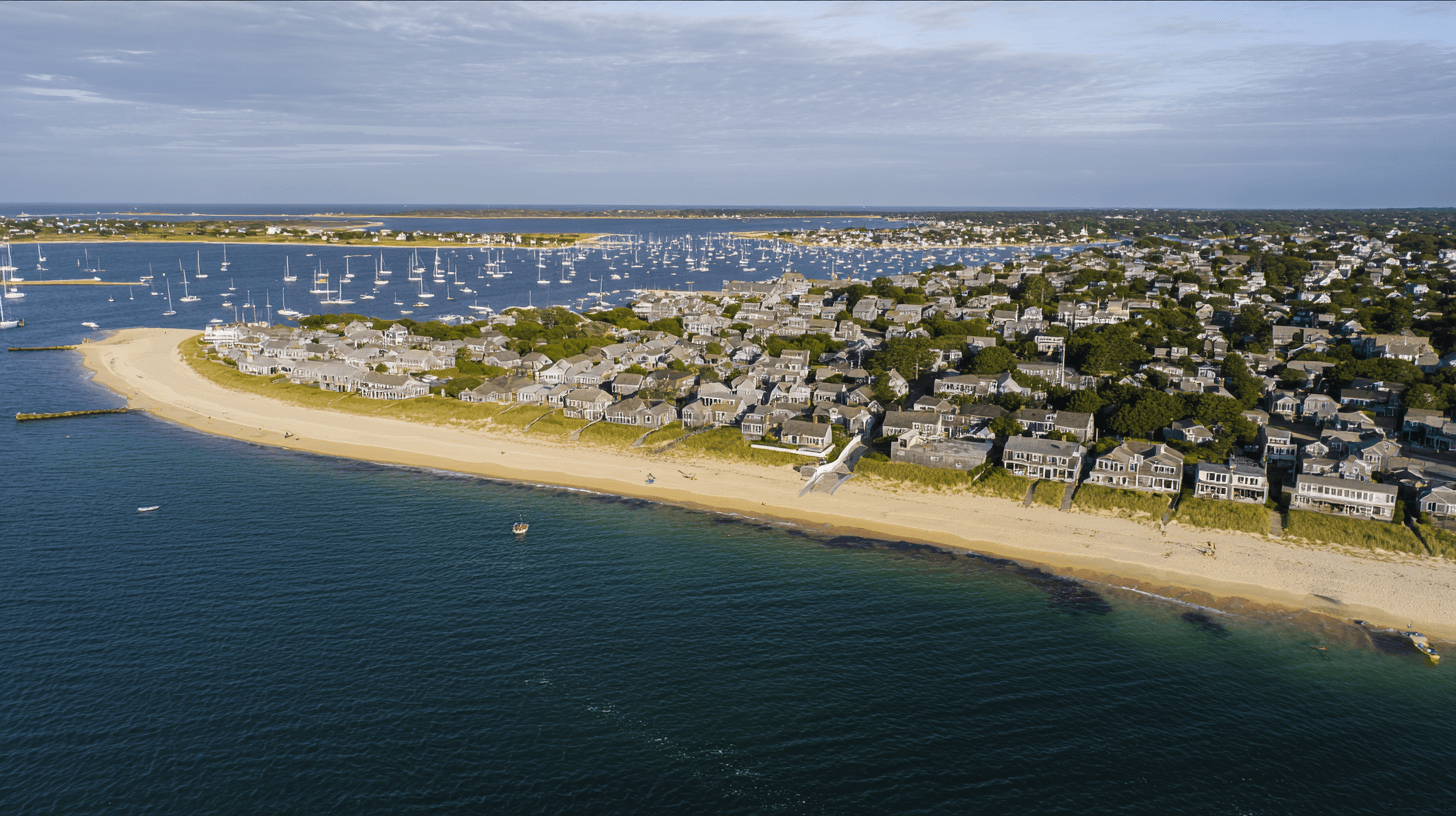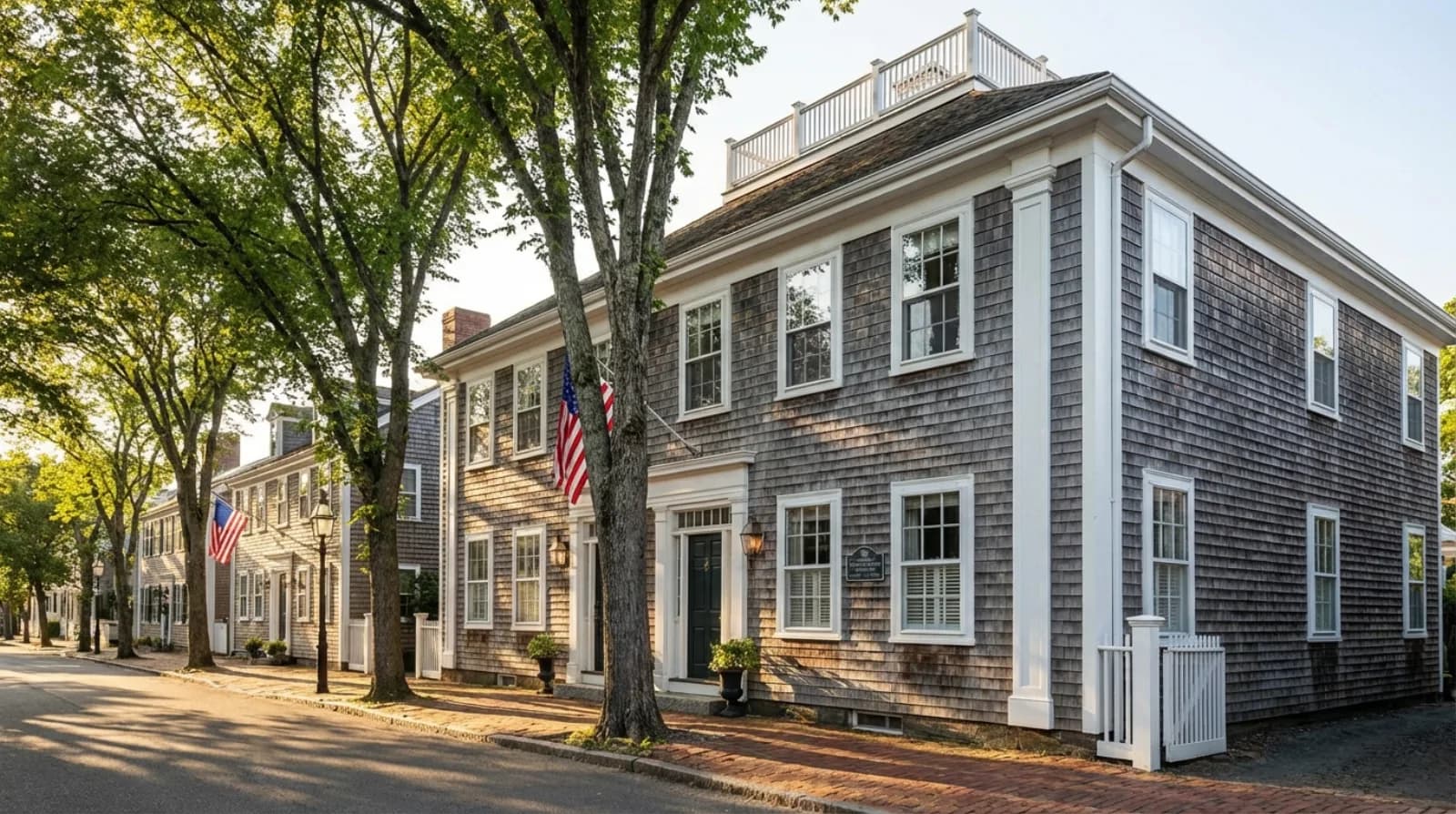
Explore the architectural legacy of Nantucket's whaling era. From modest whale houses to grand Federal mansions on Main Street, discover how whaling wealth shaped the island's distinctive built environment.
Nantucket's architectural character tells the story of maritime prosperity unlike anywhere else in America. The island's whaling industry, which dominated from the 1690s through the 1850s, funded the construction of homes that still define the streetscape today. Walking through downtown Nantucket, you encounter an unbroken collection of structures built by the captains, merchants, and craftsmen who made this isolated island the whaling capital of the world.
Understanding Nantucket whaling architecture provides essential context for anyone considering historic property ownership. These homes represent more than real estate investments. They connect owners to a defining chapter of American maritime history.
For a comprehensive guide to all historic properties, see our Nantucket Historic Homes and Historic District Guide.
How Whaling Shaped Nantucket's Built Environment
The pursuit of whales was the primary business of Nantucket for over 150 years. In the mid-1700s, the island operated as the world's leading whaling port, with dozens of ships departing annually for voyages that could last three to four years. The wealth generated by this dangerous industry transformed a modest colonial settlement into a prosperous maritime community.
The Scale of Whaling Prosperity:
- Peak years: 1820s-1840s with over 80 ships operating
- Primary exports: Whale oil for lighting and spermaceti for candles
- Global reach: Voyages to the Pacific, Atlantic, and Arctic
- Economic impact: Supported entire community including shipbuilders, coopers, chandlers, and merchants
This concentrated wealth created distinct social classes, each reflected in the architecture they could afford. Successful captains built substantial homes on prominent streets. Merchants who financed voyages erected elegant residences nearby. Working sailors and tradespeople occupied modest cottages throughout town.
The architectural legacy survives remarkably intact. Economic decline after the 1850s meant islanders lacked resources for new construction or demolition. Buildings were preserved by circumstance, frozen in time while mainland communities rebuilt. By the time tourism brought new prosperity in the late 1800s, Nantucket had inadvertently preserved one of America's most complete pre-Civil War streetscapes.
The Whale House: Nantucket's Earliest Architecture
The term "whale house" refers to Nantucket's earliest residential structures, small buildings that served as seasonal shelters for fishermen. These modest buildings, concentrated in areas like Sconset, represent the island's most historic and collectible properties.
Original Whale House Characteristics:
- Dimensions: Approximately 10 by 12 feet
- Construction: Single-room with sleeping loft
- Exterior: Gray shingle siding weathered to silver
- Windows: Small panes to retain heat
- Purpose: Seasonal shelter for fishing operations
Whale houses were expanded over generations as families grew and fortunes improved. These additions, called "warts," were attached to original structures in various configurations. A whale house might receive a lean-to addition, then a side wing, then a second story, all while maintaining the original core as evidence of its origins.
Today, whale houses command exceptional prices despite their modest size. The combination of extreme rarity, historic significance, and romantic character creates intense demand among collectors and history enthusiasts. Original whale houses almost never reach the public market, often passing through families or selling privately before listing.
Whale House Market Position:
- Price range: $2.5M-$8M depending on condition and location
- Inventory: Extremely limited, rarely available
- Buyer profile: History collectors, preservation enthusiasts
- Considerations: Limited interior space, highest preservation sensitivity
Nantucket Whaling Houses: Captain's Homes
The grandest expression of whaling wealth appears in the substantial homes built by successful captains. These properties, concentrated along Main Street and Orange Street, represent the highest social achievement of the whaling era.
Whaling captains occupied a unique position in Nantucket society. They commanded vessels worth thousands of dollars, managed crews of 20-30 men, and made life-or-death decisions during voyages lasting years. Successful captains returned with shares of profitable catches that funded comfortable retirements.
Characteristics of Captain's Houses:
- Scale: Substantial two-story or two-and-a-half-story construction
- Siting: Prominent positions on Main Street or Orange Street
- Quality: Finest available materials and craftsmanship
- Style: Typically Federal or Greek Revival
- Features: Widow's walks for observing the harbor
The widow's walk, a rooftop platform surrounded by a balustrade, has become an iconic feature associated with whaling-era homes. Legend holds that captain's wives watched from these perches for returning ships. In practice, widow's walks served multiple purposes including fire watching and providing elevated views of the harbor where business was conducted.
Captain's homes today represent trophy properties rarely traded on the open market. Multi-generational family ownership is common, with some properties remaining in the same families for over a century. When these homes do reach market, they attract serious buyers prepared to pay premium prices for irreplaceable pieces of American history.
The Three Bricks and Federal Architecture
The Federal style dominated Nantucket construction during the peak whaling years, roughly 1790 through 1840. This elegant architectural approach reflected both the prosperity of successful merchants and the restrained values of the island's Quaker heritage.
Federal architecture emphasizes symmetry, proportion, and delicate ornament. The style arrived in America from England and Scotland, adapted from the work of architects Robert and James Adam. On Nantucket, Federal buildings incorporated local materials and construction methods while maintaining the style's characteristic refinement.
Federal Style Characteristics:
- Facades: Symmetrical with centered entrance
- Doorways: Fanlights and sidelights creating decorative entries
- Trim: Delicate exterior moldings and cornices
- Windows: Multi-paned with thin muntins
- Rooflines: Hip or gable roofs, often with widow's walks
The Three Bricks on Main Street exemplify Federal architecture at its finest. Built between 1836 and 1838 by whale oil merchant Joseph Starbuck for his three sons, these matching brick residences remain among the island's most iconic structures. Their identical facades and prominent position demonstrate how whaling wealth could fund ambitious architectural statements.
The Starbuck houses represent a specific type of Federal design adapted to family purposes. Joseph Starbuck constructed the three homes to keep his adult sons nearby, creating a family compound that reinforced both social bonds and business relationships. This pattern of connected family properties appears throughout Nantucket's whaling-era neighborhoods.
Greek Revival: The Height of Whaling Prosperity
Greek Revival architecture arrived on Nantucket just as the whaling industry reached its peak in the 1830s and 1840s. This bold style, inspired by ancient Greek temples and popular throughout America during this period, appears in several of the island's most prominent structures.
Greek Revival represented a departure from Federal restraint toward more dramatic architectural statements. The style embraced columned porticos, bold pediments, and substantial scale that announced the wealth and confidence of its builders.
Greek Revival Characteristics:
- Porticos: Columned entries with triangular pediments
- Scale: Larger and more imposing than Federal predecessors
- Cornices: Heavy, bold treatment at rooflines
- Windows: Symmetrical placement, often with decorative trim
- Color: White or light-colored paint typical of the period
The Hadwen Houses on Main Street showcase grand Greek Revival design. William Hadwen, a whale oil merchant, constructed these residences with columned facades that represented the height of pre-decline prosperity. The scale and ambition of these homes reflected confidence in continued whaling success that economic circumstances would soon undermine.
Greek Revival on Nantucket occupies an interesting historical position. The style flourished just as the industry that funded it began to decline. Many Greek Revival homes were completed in the 1840s, the same decade that saw competition from petroleum begin to erode whale oil markets. These buildings represent the final flowering of whaling-era construction.
The Great Fire and Rebuilding
The Great Fire of July 13, 1846, destroyed approximately one-third of downtown Nantucket including the wharves and commercial district. This catastrophic event shaped the island's architectural development in ways that remain visible today.
The fire consumed over 300 buildings in the commercial core, including warehouses, shops, and the structures that supported whaling operations. Ironically, this destruction occurred just as the industry was beginning its decline, leaving residents to rebuild during increasingly difficult economic circumstances.
Post-Fire Rebuilding Patterns:
- Rapid reconstruction of commercial district
- Brick construction required in fire zones
- Consistent architectural vocabulary in rebuilt areas
- Some Greek Revival influence in commercial buildings
- Financial strain evident in simpler construction
The rebuilding created remarkably consistent streetscapes that survive today. Structures erected in the late 1840s share similar proportions, materials, and details, giving downtown Nantucket an architectural harmony unusual in American towns. This consistency, combined with subsequent economic decline that prevented later alterations, explains why the island's historic core appears so unified.
The Role of Quaker Influence
Nantucket's Quaker population exerted significant influence over the island's architectural character. The Society of Friends emphasized simplicity, quality craftsmanship, and restraint in personal display. These values shaped building choices throughout the whaling era.
Quaker principles discouraged excessive ornamentation and ostentatious display. Even the wealthiest Quaker merchants built homes that emphasized quality materials and construction over decorative flourishes. This cultural preference explains why Nantucket's Federal-era buildings appear restrained compared to contemporary construction in cities like Boston or Philadelphia.
Quaker Architectural Values:
- Simplicity in exterior treatment
- Quality materials over decorative elements
- Restrained color palettes
- Emphasis on proportion and craftsmanship
- Functional rather than ornamental features
The Quaker influence also affected building interiors. Wide plank floors, simple moldings, and high-quality joinery characterize whaling-era interiors. These elements have become highly prized by contemporary buyers seeking authentic historic character.
Not all island residents were Quakers, and the society's influence waned over time. By the 1830s and 1840s, more elaborate Greek Revival designs reflected changing tastes and the declining influence of Quaker restraint. The architectural record thus documents evolving social values alongside changing economic circumstances.
Supporting Structures: The Whaling Infrastructure
Beyond residential architecture, the whaling industry required extensive supporting infrastructure. While much of this industrial architecture was lost to the Great Fire and subsequent development, understanding these structures helps explain Nantucket's urban form.
Whaling Industry Buildings:
- Wharves: Timber structures for loading and unloading vessels
- Try works: Facilities for rendering whale blubber into oil
- Cooperages: Workshops for barrel making
- Ropewalks: Long narrow buildings for rope production
- Chandleries: Shops selling supplies and equipment
- Counting houses: Offices for merchants and agents
The Rotch Counting House, now home to the Pacific Club, exemplifies surviving commercial architecture from the whaling era. This building served as the business headquarters for one of Nantucket's most prominent whaling families. The Rotch family dominated island commerce across three generations, their rise paralleling the whaling industry's growth.
The Pacific Club itself represents the social dimension of whaling business. This organization provided a gathering place for retired sea captains, maintaining connections among men who had shared the dangers and rewards of whaling voyages. The club continues operating today, one of the oldest such organizations in America.
From Whaling to Summer Colony
The whaling industry's decline after the 1850s created a period of economic stagnation that inadvertently preserved the architectural heritage. With no money for new construction, buildings remained unchanged for decades. By the time prosperity returned through tourism, attitudes toward historic preservation had evolved.
Artists, writers, and summer visitors discovered Nantucket in the late 1800s. They found an island that appeared frozen in time, its whaling-era architecture intact and picturesque. Rather than viewing old buildings as outdated, these newcomers appreciated their historic character and advocated for preservation.
The Shingle Style, which emerged in the 1880s, represented a distinctly American architectural response that drew inspiration from early colonial buildings like those on Nantucket. Architectural historian Vincent Scully called this approach "the architecture of the American summer." Practitioners looked to weathered shingle structures for inspiration, creating grand summer estates that honored rather than competed with historic precedents.
Shingle Style on Nantucket:
- Period: 1880s-1910s
- Character: Wood shingles wrapping entire structure
- Features: Irregular massing, deep porches, minimal ornamentation
- Integration: Designed to complement rather than contrast with historic buildings
- Locations: Grand estates along Cliff Road and coastal areas
The formal historic district, established in 1955, codified preservation values that had developed over decades. Nantucket became one of the earliest American communities to adopt comprehensive historic zoning, ensuring that the whaling-era character that had attracted summer residents would survive for future generations.
Owning Nantucket Whaling Architecture Today
Purchasing a whaling-era property connects buyers to an exceptional chapter of American history. These homes offer irreplaceable character, authentic craftsmanship, and positions within one of the country's most carefully preserved historic districts.
What Buyers Should Understand:
- All exterior changes require Historic District Commission approval
- Historic materials require specialized maintenance approaches
- Renovation timelines typically exceed mainland projects
- Contractor availability for historic work is limited
- Investment values have proven resilient over time
The regulatory framework that protects Nantucket's architecture also protects property values. HDC oversight ensures that neighboring properties cannot be altered in ways that diminish historic character. This collective protection benefits all owners within the historic district.
For detailed information about HDC requirements and preservation guidelines, see our Nantucket Historic Homes and Historic District Guide.
Exploring Whaling Architecture
Several resources help visitors and prospective buyers understand Nantucket's whaling architecture:
Nantucket Historical Association: The NHA maintains the Whaling Museum, historic properties, and extensive archives documenting the whaling era. Their research library provides detailed information about individual properties and families.
Walking Tours: Self-guided and organized tours allow visitors to experience the architectural heritage firsthand. Main Street, Orange Street, and the downtown core offer concentrated examples of whaling-era construction.
Historic House Museums: Several whaling-era homes operate as museums, allowing interior access to see period features and furnishings. The Hadwen House and Jethro Coffin House provide different perspectives on whaling-era life.
Finding Whaling-Era Properties
Nantucket's whaling-era homes represent some of the most desirable and scarce properties in American real estate. Limited inventory, intense demand, and multi-generational family ownership mean these properties require patience and preparation to acquire.
Strategy for Finding Historic Properties:
- Establish relationships before properties reach market
- Be prepared to act quickly when opportunities arise
- Understand that many properties trade privately
- Work with agents who know the historic inventory
- Have financing and professionals lined up in advance
For more about living in Nantucket and navigating the historic property market, schedule a consultation to discuss your goals and timeline.
Related Guides
- Nantucket Historic Homes and Historic District Guide
- Downtown Nantucket Neighborhood
- Living in Nantucket: Complete Guide
Nantucket's whaling architecture represents an irreplaceable American heritage. Whether you seek a modest whale house cottage or a grand captain's mansion, understanding this architectural legacy is essential for appreciating what makes these properties exceptional.
Work with a Nantucket Expert
Looking for your Nantucket home? John Trudel has been helping buyers find their perfect island property for over 29 years. With deep local knowledge of every neighborhood, pricing trend, and historic consideration, he provides the guidance you need to make a confident decision.
Schedule a consultation to discuss your goals, or browse current listings to start exploring.